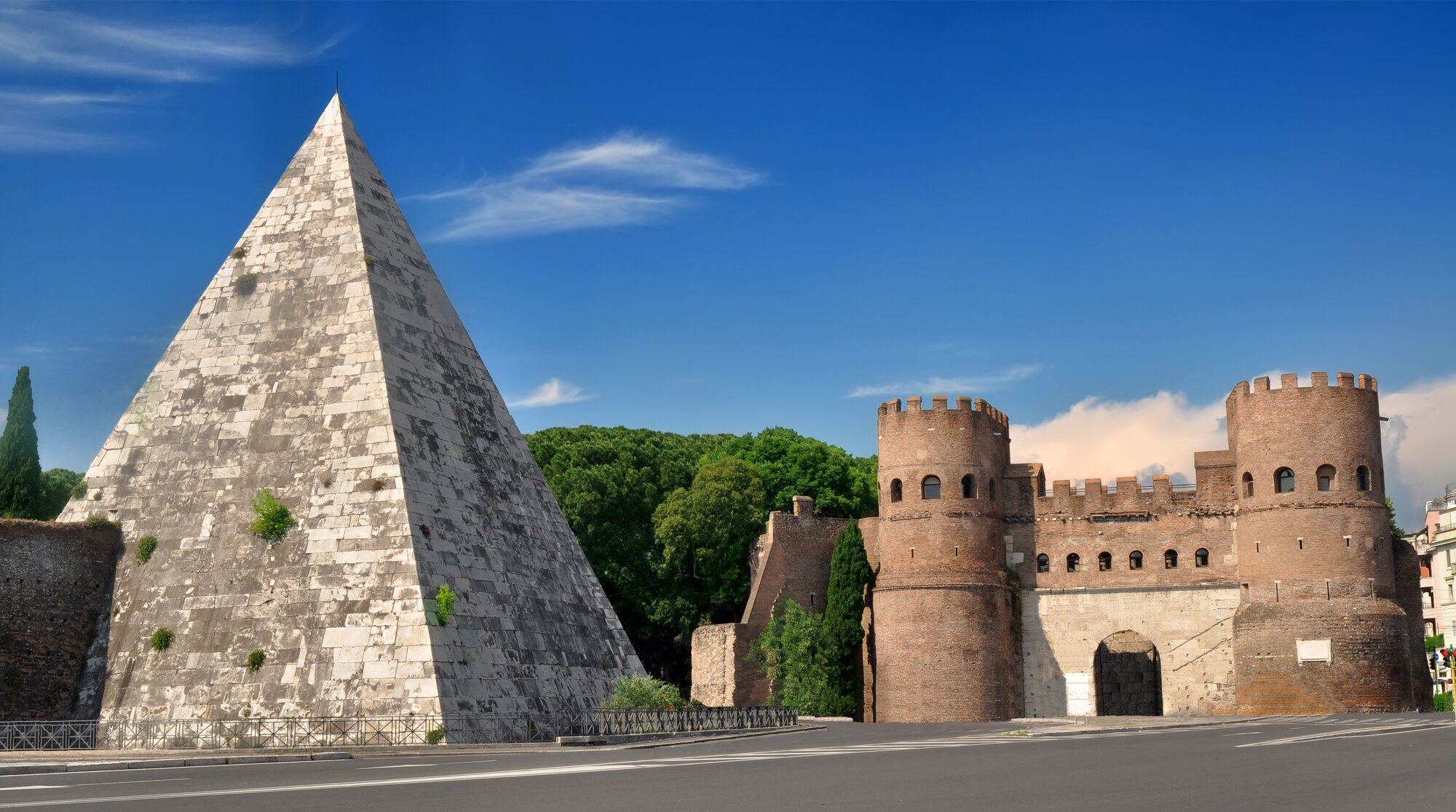
Rome's hidden gems would be highlights elsewhere, yet the Eternal City's history is so dense that world-famous landmarks like the Colosseum get all the attention. Beyond the major attractions, though, there are plenty of secret spots to uncover, if you know where to look.
Head to the Villa Farnesina to discover Raphael’s frescoes alongside a remarkable collection of Renaissance art, explore subterranean ruins beneath the Basilica of San Clemente, and don’t miss the Pyramid of Cestius, arguably the city’s most surprising monument.
Our roundup of the best things to do in Rome covers the essential sights, but these are the top hidden places if you want to dive deeper into Roman history.
Terms and Conditions apply.
Hidden Places in Rome for Art and Architecture
Passetto del Biscione: Secret Fresco-Covered Passageway
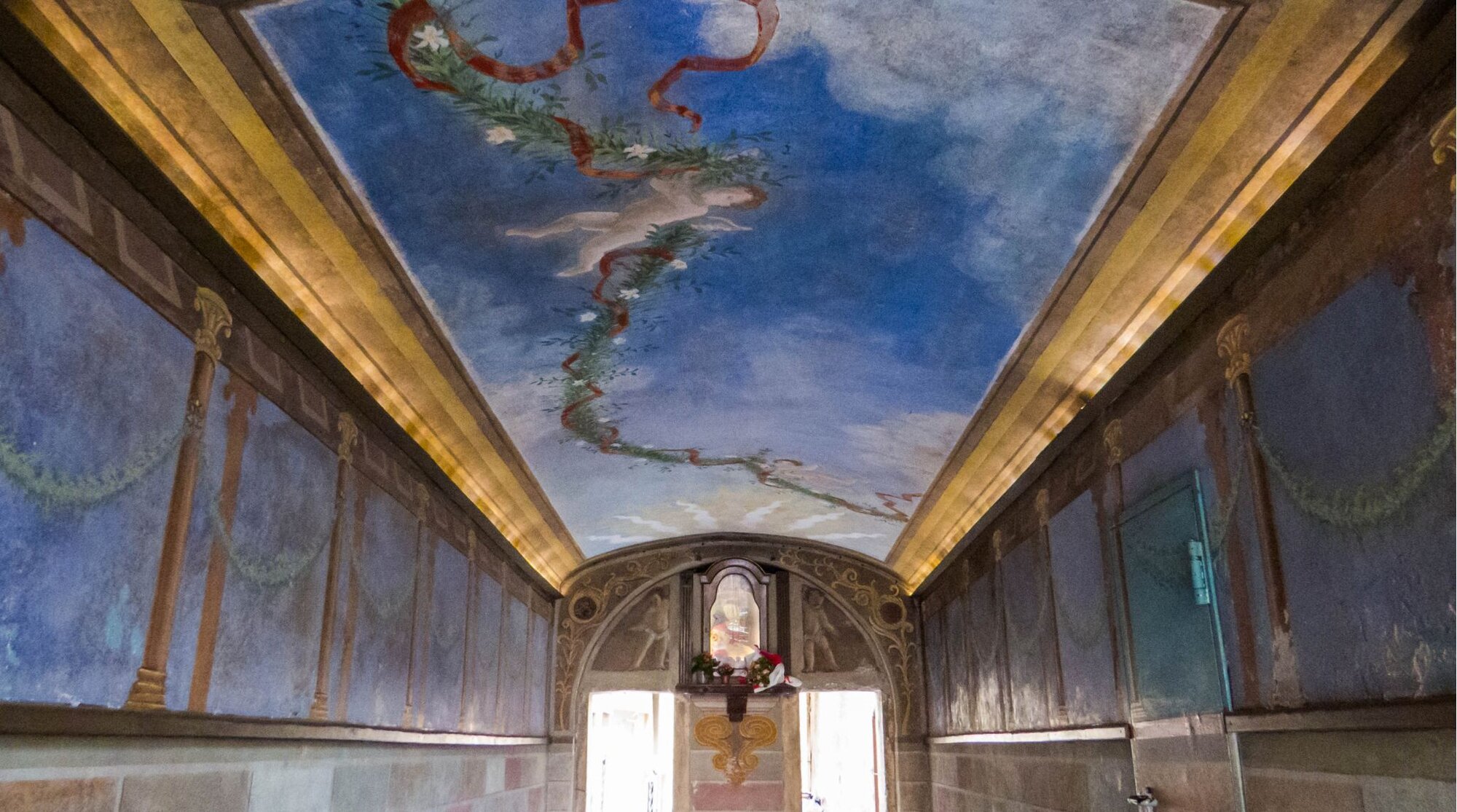
The Passetto del Biscione may look unassuming from the outside, but that's exactly why this fresco-covered passageway is one of Rome's best free hidden gems. Although it’s just a few steps from the busy market square of Campo de’ Fiori, most tourists don’t give it a second glance, completely unaware of the artwork hidden inside.
The passageway’s ceiling fresco steals the show as soon as you step inside, revealing a cherub floating overhead in a rich blue sky. After decades of neglect, the Passetto del Biscione was restored between 2014 and 2016, but it remains a fairly well-kept secret.
A small shrine to the Virgin Mary sits in the wall. Although it's no longer the original painting, this exact copy marks the spot where the artwork allegedly opened and closed its eyes back in 1796.
The passage also sits on the ruins of the ancient Theatre of Pompey — the complex where Julius Caesar was famously assassinated over 2,000 years ago.
Villa Farnesina: Renaissance Architecture and Raphael’s Frescoes
The 16th-century Villa Farnesina houses a spectacular collection of Renaissance art, from grand paintings to intricate ceiling frescoes. Built as a private estate for a wealthy banker, the extravagant villa was designed to host luxurious banquets for Rome's elite.
Its opulent interior shows how the social elite lived, with masterpiece after masterpiece making it a worthy inclusion on any Italy itinerary.
The undeniable highlights are Raphael's frescoes: The Triumph of Galatea and the massive Loggia of Cupid and Psyche, both depicting mythological scenes through exceptional artistry. Another standout is the Hall of Perspectives, where painted columns cleverly create the illusion of looking out over Rome.
It's an excellent alternative to the Vatican Museums if you want to avoid the crowds, and the villa's location in Trastevere is the perfect excuse to explore one of Rome's most charming neighbourhoods.
Hidden Gems in Rome for History Lovers
Pyramid of Cestius: An Unexpected Roman Landmark
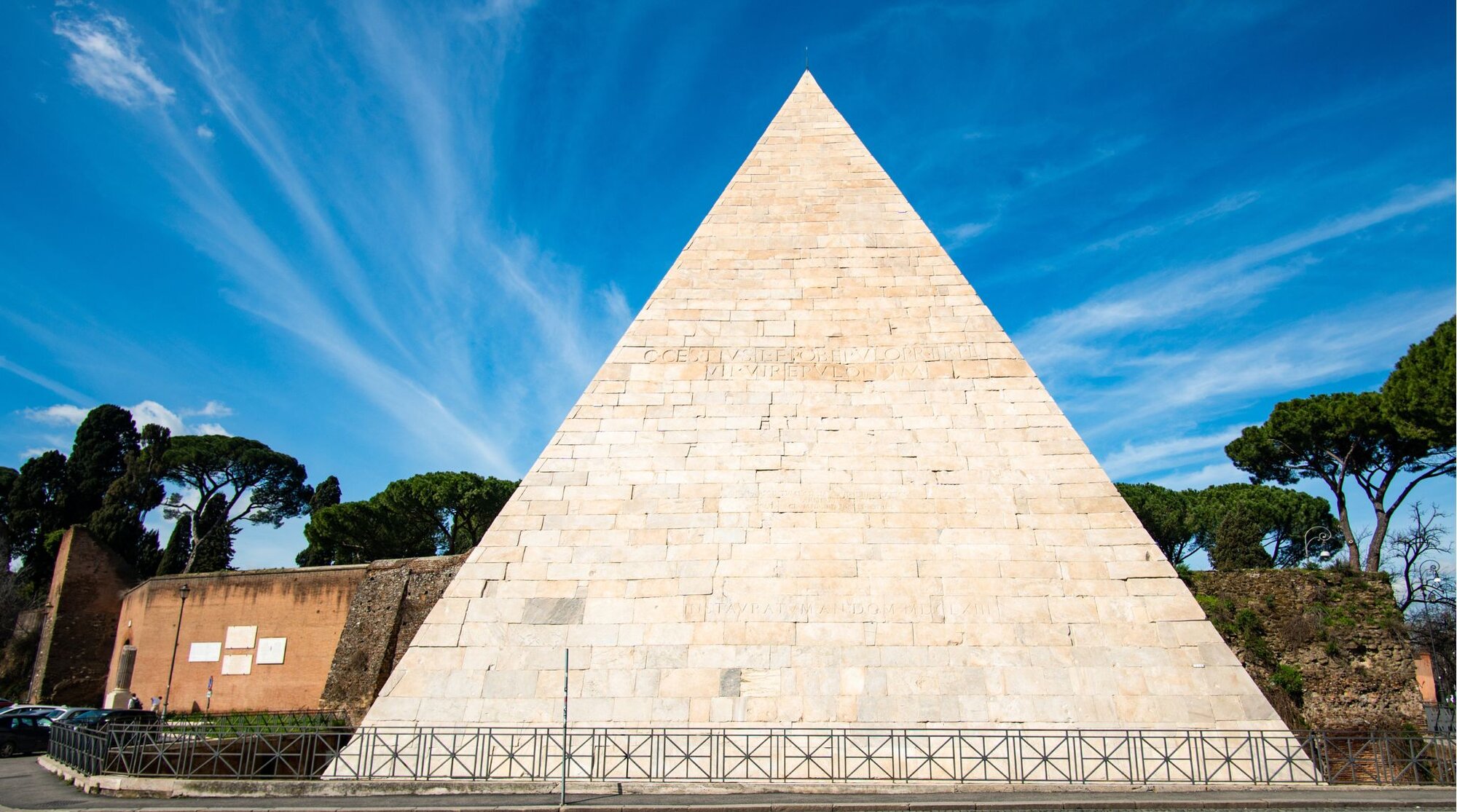
Dating back to 12 BC, the Pyramid of Cestius is definitely one of Rome's more surprising hidden gems. Despite being just two metro stops or less than a 30-minute walk from the Colosseum, most tourists have no idea it even exists.
Built as a tomb for a wealthy Roman magistrate named Gaius Cestius, the pyramid stands 36 metres tall and was later incorporated into the city's defensive walls. Its steep-sided design was influenced by the narrow Nubian pyramids of Sudan, and even though it's substantially smaller than Egypt's iconic Pyramids of Giza, there’s something special about seeing a 2,000-year-old pyramid sitting right next to a busy road.
Although interior tours used to run on the second and fourth weekends of the month, as of mid-2026, access to the inside has been put on hold. Fortunately, it’s the pyramid’s striking marble exterior that makes the biggest impression anyway, so it's still well worth a visit.
Case Romane del Celio: Subterranean Roman Residences
The Case Romane del Celio is a unique underground archaeological site where you can explore more than 20 rooms of ancient Roman houses. Located beneath the 4th-century Basilica of Saints John and Paul, the complex showcases a mix of remarkably preserved luxury residences and modest apartments.
Many of the rooms feature impressive pagan and early Christian frescoes that have survived relatively intact despite being buried for centuries. And because there aren't the crowds found at major attractions like the Roman Forum, you can really take your time appreciating the artwork without feeling rushed.
The site also holds historical significance; according to tradition, it was the home of Roman soldiers John and Paul, who were secretly martyred and buried here. The basilica above was later built over the rooms to protect their final resting place.
In addition to the rooms themselves, the complex includes a small museum that displays various Roman artefacts excavated on-site, from oil lamps to ancient ceramic dishes. As of 2026, entry costs just €8 per person, with an additional €5 fee for an audio guide.
Hidden Gems in Rome: Secret Churches and Crypts
Basilica of San Clemente: Three Layers of History
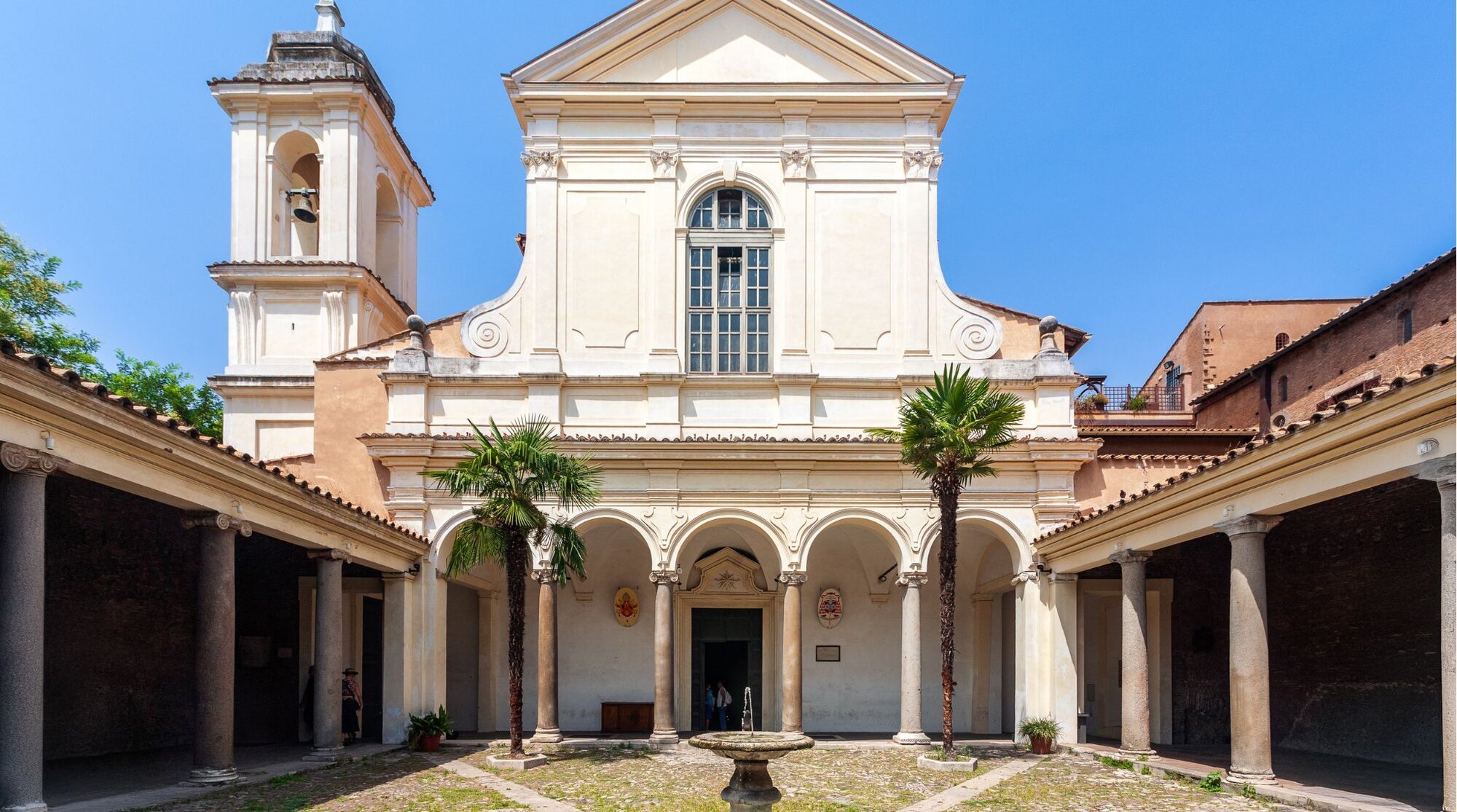
The Basilica of San Clemente quite literally sits on top of two of Rome’s best hidden places: an underground 4th-century church and a pagan temple beneath it. Even the main church is reasonably concealed, walled off with only a modest gateway leading into its front courtyard.
The street-level 12th-century basilica is free to visit, but access to the archaeological excavations beneath requires a paid ticket (€10 via the official basilica website as of 2026). Don't head straight underground, though. The upper church houses an impressive, almost glowing mosaic of Christ behind the main altar, alongside vibrant frescoes of saints and religious scenes.
San Clemente's middle layer is a 4th-century basilica that was filled in with dirt and rubble in the early 1100s to act as a foundation for the newer church above. Its frescoes are understandably faded, but the nave columns and general structure remain intact.
Continue down to the bottom level to discover the remains of a 1st-century Roman neighbourhood. Among the ruins is a preserved Mithraeum — a pagan temple with stone benches running alongside a central sacrificial altar.
Despite its unique history and its location just a few minutes’ walk from the Colosseum, the basilica tends to be overshadowed by iconic landmarks like the Pantheon, so you can explore in relative peace.
💡 Pro Tip: Entry to the excavations is capped at 75 visitors per half-hour. Last-minute slots are often available, even in summer, so grab an Italy eSIM to give yourself the flexibility to book tickets on the go.
The Capuchin Crypt: Underground Chapels and Eerie Burial Chambers
Located beneath the church of Santa Maria della Concezione dei Cappuccini, the Capuchin Crypt comprises a series of eerie burial chambers adorned with the skeletal remains of former friars.
When Capuchin friars moved to the church in 1631, they brought the remains of thousands of deceased members with them. Their bones were arranged into unique displays across the crypt’s walls and ceilings to serve as a poignant reminder that life is temporary, summed up by the inscription “What you are now we used to be; what we are now you will be.”
There are five burial crypts in total alongside a chapel. The Crypt of the Three Skeletons is particularly haunting, with fully-robed skeletons surrounded by bones, as is the elaborate Crypt of the Skulls, where stacks of skulls stretch from the floor to the ceiling.
Tickets cost €10 (as of 2026), but there’s an extra fee if you book in advance via the crypt’s official website. Entry includes an audio guide and access to a small museum covering the history of the Capuchin order. Keep in mind that the crypt's dress code requires visitors to cover their knees and shoulders.
Terms and Conditions apply.
Directs to Airalo help center for more support information.